Seasonal & Emergency8 min read
Spring Paver Repair in MA: Fixing Freeze-Thaw Damage the Right Way
What winter's freeze-thaw cycles actually do to a paver patio or walkway, and how to fix it right instead of papering over it.

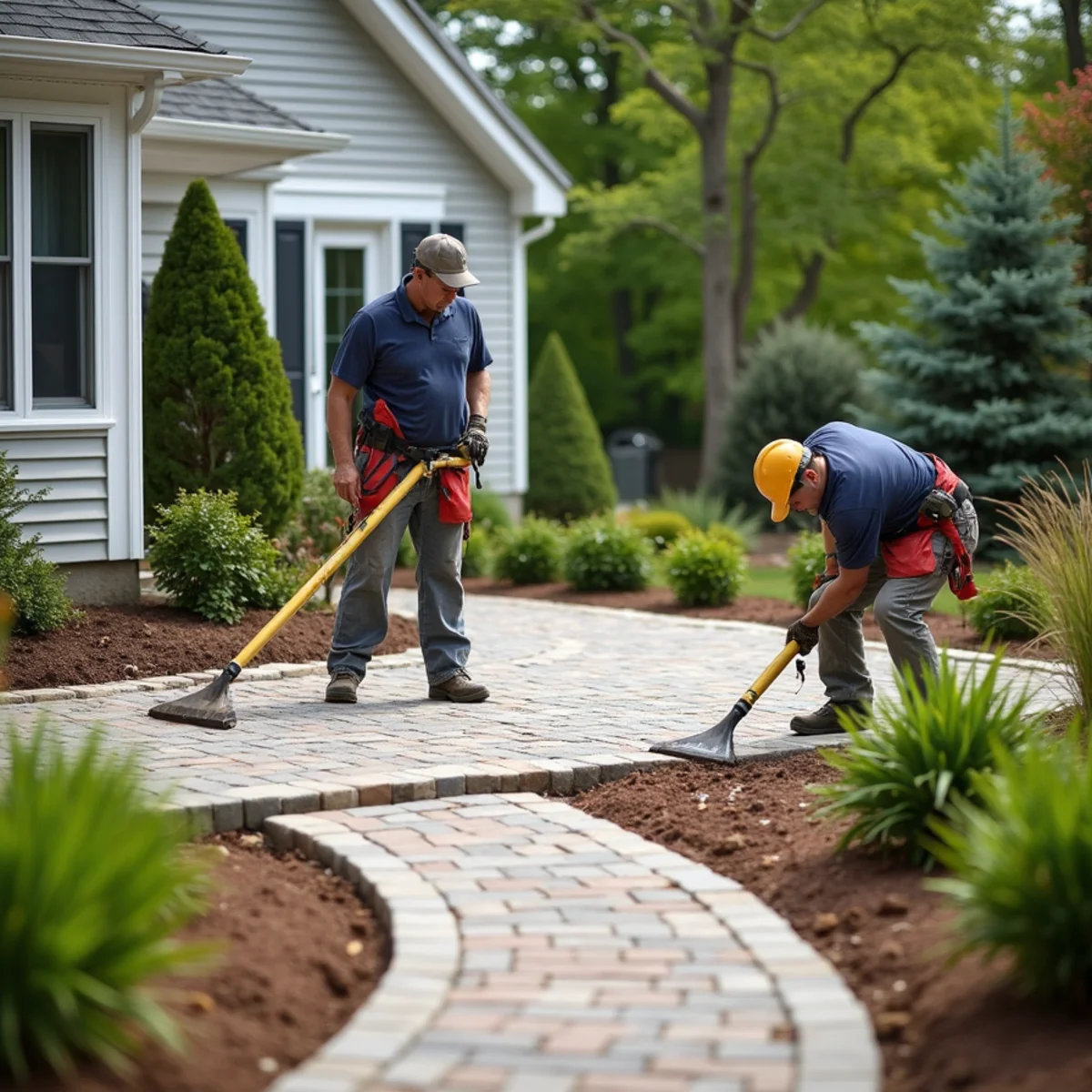
Fixing what a Massachusetts winter did to your patio, walkway, or wall
Every spring, after the ground thaws and reveals what winter actually did, we get the same round of calls across Wellesley and MetroWest: pavers that heaved out of level, a retaining wall that shifted, mortar joints that crumbled over the cold months. Spring hardscape repair is our service specifically for this, fixing freeze-thaw damage properly, meaning we address the base or footing problem that caused the damage, not just re-setting the same stones on top of the same failed foundation. Sunken sections show up just as often as heaved ones, and both point to the same underlying lesson: whatever a base does over one winter, it will keep doing, worse, over the next one, until someone corrects the base itself.
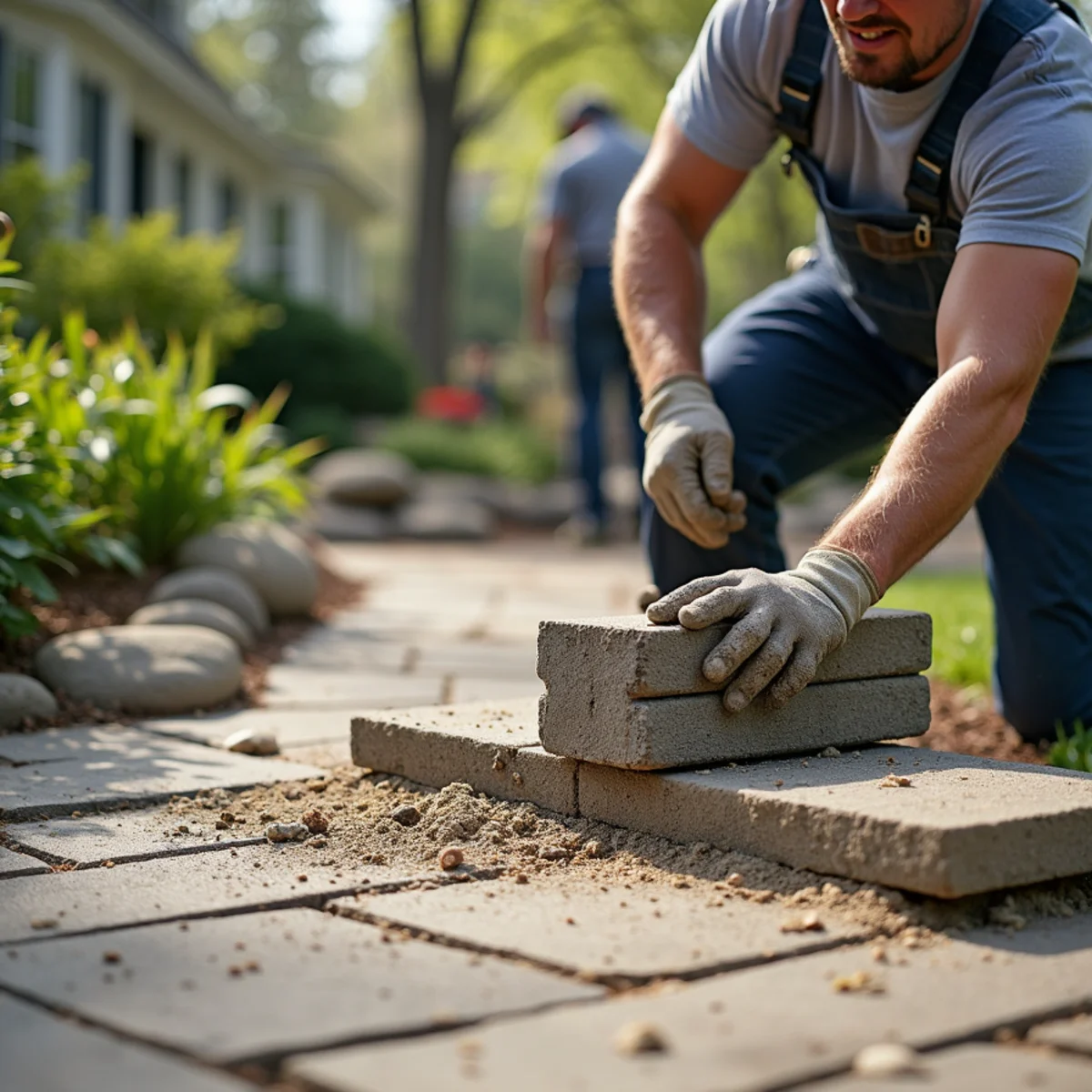
Massachusetts freeze-thaw cycling is genuinely hard on hardscape. Water gets into small gaps in a base or behind a wall, freezes, expands, and pushes material out of place; this repeats through the winter and the cumulative movement is what you see as heaving, cracking, and leaning once spring arrives. A repair that only resets the visible stone without correcting the base or drainage underneath will show the same damage again next winter, sometimes worse.
We handle everything from a few heaved pavers along a walkway edge to a significant wall rebuild after a hard winter, and we tell you plainly whether a spot repair will genuinely hold or whether the underlying base needs to be rebuilt to actually solve the problem. We prioritize trip-hazard repairs and structurally moving walls above cosmetic issues like faded polymeric sand, since safety and structural integrity matter more than appearance in the order we work through a spring repair queue.
Ready to transform your outdoor space?
Calls answered Mon–Fri 9–5 · Free estimates within 48 hours. Insured, financing available, and free on-site estimates across Wellesley & MetroWest.
Individual or clustered pavers pushed up unevenly are the most common spring repair call, almost always tracing back to a base that was too shallow or improperly compacted originally.
Frost pressure behind a wall, especially one without adequate drainage, can push the structure forward over a winter. We assess whether this is a section repair or a sign the wall needs a rebuild.
Freeze-thaw is especially hard on mortar. Joints that were fine in the fall often need repointing by spring, and delaying it lets water intrusion damage the stone or brick itself.
Settling is usually the opposite problem from heaving, a base that lost material or compaction over the winter, creating low spots that collect water. Left alone, a sunken section collects standing water that accelerates the very base erosion that caused the settling in the first place.
Even minor heaving can create a lip between adjacent pavers significant enough to be a genuine trip hazard, which we prioritize addressing quickly for liability and safety.
We inspect the affected area to determine whether the problem is isolated to visible stone or traces back to the base, footing, or drainage beneath it. We photograph and document the affected area before removal begins, useful both for your records and, on original Inova installs, for confirming whether the damage falls under warranty.
We explain plainly whether a spot repair will hold or whether the base or wall section needs to be rebuilt to prevent the same damage from recurring next winter. This is also where we're most direct about cost, a spot repair might run a fraction of a rebuild, and you deserve to know both numbers before choosing.
Damaged pavers, stone, or mortar are carefully removed without disturbing surrounding sound material where possible.
Where the base itself has failed, we rebuild it correctly, re-compacting or deepening as needed, rather than resetting stone onto the same problem.
Pavers are releveled and reset, stone is repositioned, or new mortar is applied, matched to existing material and joint style where possible.
We confirm the repaired area is level and properly drained, and explain any maintenance, like periodic re-sanding, that helps prevent a repeat next season.
We never quote from a photo. Every estimate is a written, itemized scope after an on-site assessment — here's what moves the number up or down:
Extent of the damage
A handful of heaved pavers along one edge costs far less to fix than a widespread section or a wall requiring partial rebuild. A single heaved edge paver is often a same-day fix; a wall section requiring disassembly and rebuild is a multi-day project with different equipment needs.
Whether the base needs correction
Repairs that require rebuilding the base or footing, not just resetting visible material, take more labor but are what actually prevents recurrence.
Material matching
Matching existing pavers or stone, especially older or discontinued lines, can add cost and sometimes limits options if an exact match is unavailable.
Access and timing
Spring is our busiest repair season across MetroWest, and projects requiring wall rebuilds or extensive base work take longer to schedule than a small spot repair.
Whether other trades are involved
A wall rebuild that also needs new drainage piping, or a paver repair that overlaps with an irrigation line, takes more coordination and cost than a straightforward stone-only fix.
We built spring hardscape repair into a dedicated service because it is one of the most predictable, recurring needs across MetroWest every year, and because so many repair jobs we take over from other outcomes were "fixed" the wrong way previously, resetting stone without addressing the base that actually failed. We diagnose the real cause first and tell you honestly which repairs will hold.
We are insured, offer free damage assessments typically scheduled within 48 hours during peak spring season, and provide financing through third-party partners for larger rebuild projects. If your repair reveals a broader issue, a wall that genuinely needs replacing rather than patching, or a drainage problem behind it, our retaining walls and drainage solutions teams can scope that work as part of the same visit.
Spring repair calls come from across our service area, not just Wellesley, we see the same freeze-thaw damage in Natick, Framingham, Sudbury, Wayland, and throughout Norfolk County every year once the ground thaws. Damage assessments are free and typically scheduled within 48 hours during peak season, we're insured, and financing through third-party partners is available for larger rebuild work. Crews communicate in Portuguese and Spanish as well as English on every repair crew we send out.
Techo-Bloc and bluestone paver patios built on deep, properly compacted bases so they stay flat through years of freeze-thaw.
Learn moreFieldstone, block, and veneer retaining walls engineered with proper drainage and footing depth to hold Massachusetts slopes for years.
Learn moreFieldstone walls, brick steps, bluestone walkways, and repointing built and repaired by masons who understand New England's older homes.
Learn moreWhat winter's freeze-thaw cycles actually do to a paver patio or walkway, and how to fix it right instead of papering over it.
A practical annual maintenance checklist for Massachusetts patios and walls — joint sand, sealing, and repointing on the right schedule.
Calls answered Mon–Fri 9–5 · Free estimates within 48 hours. Insured, financing available, and free on-site estimates across Wellesley & MetroWest.
Falamos Português · Se Habla Español