Spring Paver Repair in MA: Fixing Freeze-Thaw Damage the Right Way
What winter's freeze-thaw cycles actually do to a paver patio or walkway, and how to fix it right instead of papering over it.
By the Inova Outdoor Living Experts team
Key takeaways
- Repeated freeze-thaw cycles, not one hard freeze, are what damage MA patios and walkways over a winter.
- Re-sanding joints or resetting a paver on the existing base only masks a failed base — it doesn't fix it.
- A proper repair excavates to the base, re-compacts or rebuilds it, and addresses the drainage issue that caused the failure.
- Localized damage is usually repairable; widespread heaving across the whole patio often means a rebuild makes more sense.
Every spring, once the ground finally lets go of winter, we get a wave of calls about sunken patios, gapped walkways, and pavers that used to sit flush but now catch a toe. This is freeze-thaw paver repair MA season, and it follows the same pattern every year: the damage was building all winter, it just wasn't visible until the frost came out of the ground.
The good news is that most freeze-thaw damage is repairable without tearing out the whole patio — if you catch it before the base has failed completely. The bad news is that a lot of "repairs" homeowners try first, like re-sanding joints or resetting a few loose pavers, only mask the problem for a season before it returns.
Here is how to tell what you are actually dealing with, and what a proper repair involves.
Why New England Winters Are So Hard on Hardscape
Massachusetts sees dozens of freeze-thaw cycles each winter, not just one long freeze. Every time water in the soil beneath a patio freezes, it expands and pushes upward; every time it thaws, the ground settles again — but rarely back to exactly where it started. Over a season, that repeated heaving and settling works pavers loose, opens joints, and can push a base that was already thin or poorly compacted completely out of level. Our frost line runs to roughly 48 inches, which is why shallow, under-compacted bases are the single most common cause of the damage we get called out to fix.
Reading the Damage: What Each Symptom Tells You
- Individual pavers rocking or sunken usually means localized base failure — often near a downspout or low spot where water pooled and softened the base.
- Wide, uneven joints across a large area points to broad base settlement, not just a surface issue.
- A patio or walkway that has visibly tilted toward the house is a drainage problem as much as a frost problem, and needs regrading, not just resetting.
- Cracked pavers (as opposed to shifted ones) can mean a vehicle or heavy equipment load on a base not built for it, or a paver that was thin or poor quality to begin with.
- Steps or a patio pulling away from a foundation wall is worth a closer look, since it can also signal foundation-adjacent drainage issues.
The Fix That Doesn’t Actually Fix It
The most common DIY response is topping off joints with more polymeric sand and calling it done. That can genuinely help with minor surface erosion. But if pavers are visibly out of level or sunken, sand does nothing for the base underneath — it just fills the gap you can see while the base underneath stays compromised. The same is true of simply lifting and resetting a paver on the existing sand bed without addressing why it sank in the first place.
A telling sign
If the same section of patio needed "touch-up" work last spring and is doing it again this spring, that is not bad luck — it is a base problem that surface fixes can't reach. It is worth having it looked at before it spreads to pavers that are still solid.
What a Proper Repair Looks Like
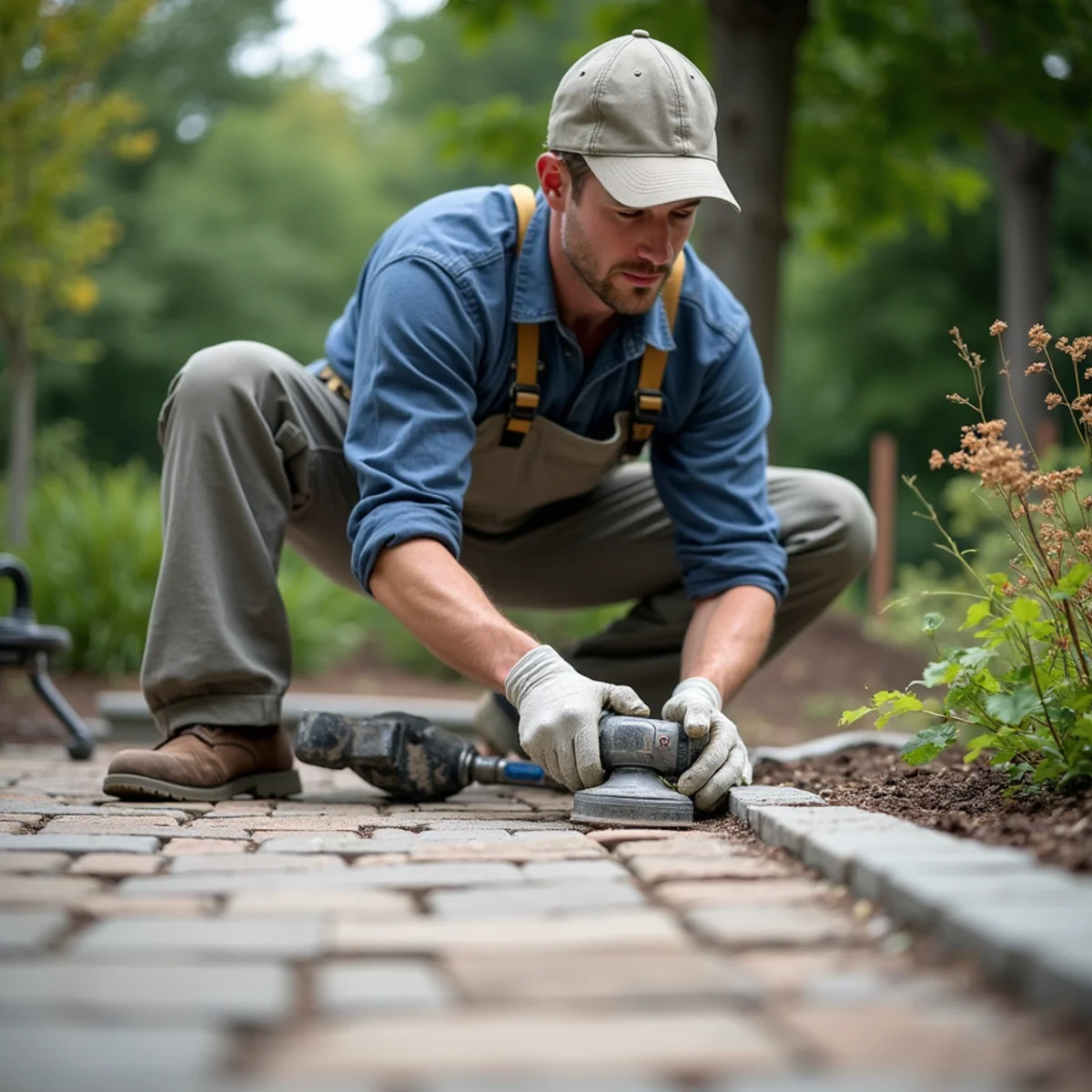
- Isolate the affected area — pull the damaged pavers and set them aside for reuse.
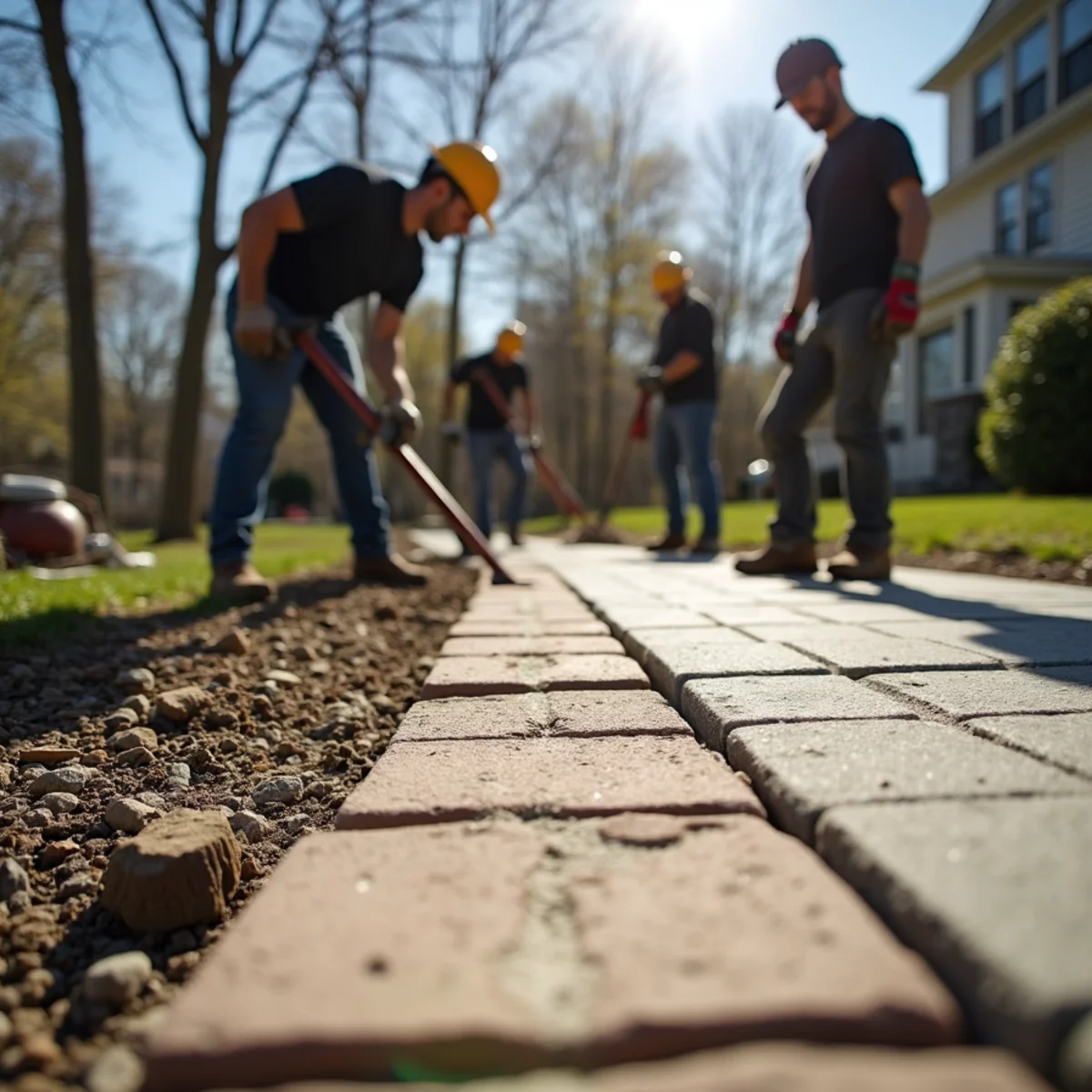
- Excavate down to the base to inspect compaction and drainage, not just the surface layer.
- Re-compact or rebuild the base with crushed stone to the correct depth, addressing any drainage issue that caused the failure.
- Reset the bedding layer level and consistent with the surrounding untouched patio.
- Relay the pavers, cut new pieces if any were damaged, and re-sand the joints.
Done this way, a repair blends into the existing patio and holds through the next several winters — because the fix addresses the actual cause, not the symptom. This is the core of our spring hardscape repair work, and it is also why we walk every damaged area down to the base before quoting a fix, rather than pricing by the square foot of visible damage alone.
Repair vs. Full Rebuild: Where the Line Is
Isolated sinking, a handful of loose pavers, or damage concentrated near one drainage point is almost always a repair, not a rebuild. Widespread heaving across the entire patio, a base that has clearly failed in multiple unrelated areas, or a patio that was under-built from day one (thin base, no edge restraint) usually makes more sense to rebuild properly rather than patch repeatedly. We will tell you honestly which category your patio falls into — repairing a patio that needs a rebuild just delays the inevitable and costs more in the long run.
Timing the Repair
Early spring, once the ground has fully thawed but before summer landscaping and irrigation season ramps up, is the ideal window for freeze-thaw repairs. Waiting until mid-summer means working around established plantings and higher demand; waiting until fall means the repaired base has less time to settle before winter returns. If your patio or walkway is in Wellesley or a nearby town, our crews are typically able to assess and schedule spring repair work within a couple of weeks of a first call.
What We Look For That Homeowners Often Miss
On a repair walkthrough, we don't just look at the pavers that are visibly out of place — we tap and rock every paver within a couple of feet of the damaged area, because a base failure rarely stops exactly at the edge of what's visible. We also check whether the damaged section sits near a paver patio expansion joint, a downspout, or a spot where a snowblower or plow repeatedly dumped snow, since those load and moisture patterns explain most of the repeat failures we see. A repair that only addresses the pavers a homeowner points to, without checking the surrounding base, tends to need a second visit within a year or two.
Get a free assessment of your winter hardscape damage before you spend money on a fix that won't last. We'll tell you honestly whether it's a repair or a rebuild.