Yard Flooding After Heavy Rain? Emergency Drainage Fixes for Wet MA Lots
First steps for standing water after heavy rain in a Massachusetts yard, and the permanent drainage fixes that actually solve it.
By the Inova Outdoor Living Experts team
Key takeaways
- Massachusetts' dense glacial till soil drains unevenly, which is a major reason yards here flood more than in sandier-soil regions.
- Recurring flooding in the same spot points to grading, a misdirected downspout, compacted soil, or a genuinely high water table.
- French drains, regrading, dry wells, and catch basins each solve different root causes — the right fix depends on the diagnosis.
- Work near wetlands in towns like Dedham may need Conservation Commission review before grading begins.
A backyard that turns into a shallow pond after every significant storm is more than an inconvenience — sustained standing water can undermine a foundation, kill lawn areas, and eventually damage hardscape. If you're dealing with a yard drainage emergency MA weather has a habit of creating, especially during a heavy spring rain event, here's what to check first and what actually fixes it long-term.
Massachusetts' glacial till soil is a big part of why this happens so often here. It's dense and mineral-heavy, which means it compacts easily and drains unevenly — water that would soak into sandier soil in other regions tends to sit on top of till until it finds somewhere to go, and if that somewhere is your yard, you'll know quickly.
We handle both emergency response and permanent fixes through our drainage solutions work, and most yards that flood repeatedly have one of a handful of root causes.
Immediate Steps During or Right After a Flood Event
- Keep water away from the foundation — if water is pooling against the house itself, that takes priority over lawn flooding, since it risks basement or crawlspace intrusion.
- Check and clear gutters and downspouts — a clogged gutter system dumping water in one concentrated spot is one of the most common (and easiest to fix) causes of localized yard flooding.
- Note where water pools and how long it takes to drain — this pattern is genuinely useful information for diagnosing the cause later.
- Avoid walking or driving on saturated lawn areas — compacting already-saturated soil makes drainage worse and can damage the lawn further.
Why the Same Spot Floods Every Time
Recurring flooding in the same location almost always traces back to one of a few causes: a low spot in the yard's grading that has no way to shed water, a downspout discharging directly onto lawn instead of into a drainage system, compacted soil (often from construction or heavy equipment during a home's original build) that won't absorb water at a reasonable rate, or a genuinely high water table in low-lying areas near a brook or wetland. Towns like Dedham, with areas along the Charles River flood plain, see this last cause more than most.
Permanent Fixes, From Simple to Involved
- Downspout extensions or a buried downspout line that carries roof runoff well away from the house and any low spots, rather than releasing it a foot from the foundation.
- Regrading a low area so water sheets away toward a safe discharge point instead of pooling — often the single most effective fix for a flat backyard.
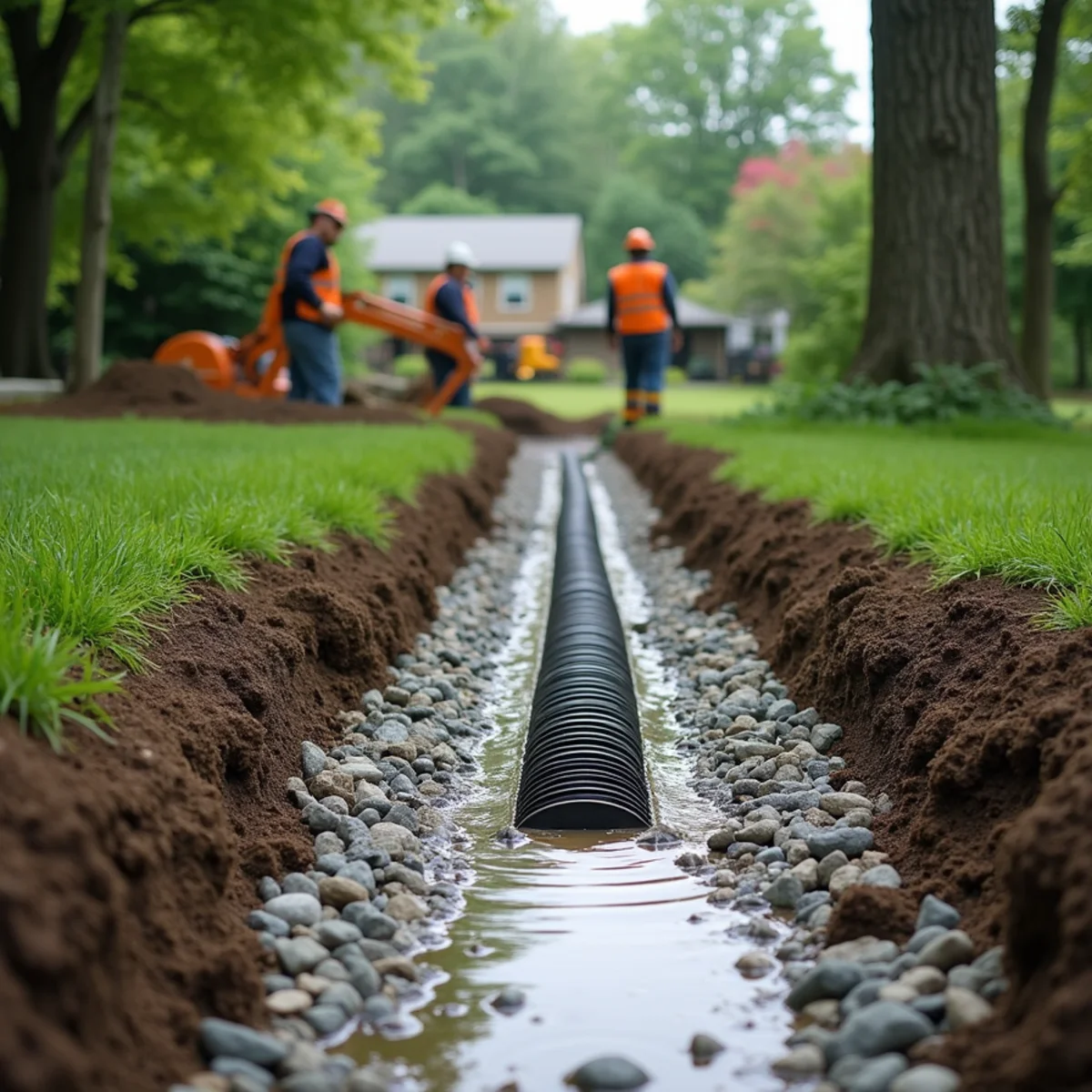
- French drains — a perforated pipe in a gravel-filled trench that intercepts groundwater and surface water and redirects it to daylight or a dry well.
- Dry wells for properties without a good gravity discharge point, allowing collected water to slowly infiltrate below grade rather than surfacing.
- Catch basins tied into a piped system for larger or more complex sites, particularly where multiple low spots need to be addressed together.
A common and expensive mistake
Adding topsoil to "raise" a low spot without addressing where the water is actually coming from usually just moves the flooding a few feet, or delays it a season until the new soil compacts. A drainage fix needs to account for the water's source and where it's meant to end up — not just cover the symptom.
Wetlands and Drainage Work in Dedham
In Dedham, where the Charles River flood plain and other wetland-adjacent areas are common, drainage work close to a wetland resource area can trigger Conservation Commission review — work within 100 feet of a wetland or 200 feet of a river, stream, or vernal pool often needs a permit before grading or excavation begins. This isn't a reason to avoid fixing a drainage problem; it just means the design and permitting need to happen together, which we handle as part of the project scope rather than as a separate hurdle.
When It's a Drainage Problem vs. a Grading Problem
Water that sits for hours or days after a storm, especially in a flat area with no clear low point, usually points to a soil infiltration problem better solved with a French drain or dry well. Water that runs quickly to one specific low spot and sits there is more often a grading issue solved by regrading or redirecting the flow before it arrives. Getting this diagnosis right matters, because the two problems have different fixes, and treating a grading issue with a French drain (or vice versa) can waste money without solving the flooding.
Most yards that flood aren't unlucky — they're telling you exactly where the water wants to go. The fix is giving it somewhere better to go instead.
What Chronic Flooding Does to a Lawn Over Time
A lawn that sits under standing water for more than a day or two, repeatedly across a season, starts to lose grass to root suffocation before you'll notice any change above ground — the grass looks fine until it suddenly doesn't, usually showing up as thinning or dead patches the following spring rather than immediately after a flood event. Soil that's been saturated and compacted repeatedly also becomes progressively worse at draining, which is why a mild flooding issue in year one can become a serious one by year three if the underlying cause is never fixed. Once a drainage fix is in place, those chronically wet areas often need lawn and sod installation work to re-establish grass in soil that's been struggling for one or more seasons, rather than simply reseeding over compacted, oxygen-starved ground.
Getting a Permanent Fix in Place
Because drainage problems compound — a wet spot that isn't fixed this year tends to get wetter and larger next year as soil compaction and erosion worsen — it's worth addressing sooner rather than living with it through another storm season. We assess the site, trace where water is actually coming from, and design a fix sized to the real volume of water involved, not just the visible puddle.
Get a free drainage assessment for your yard and a permanent fix before the next heavy rain event.