Bluestone vs. Concrete Pavers for New England Patios
How bluestone and concrete pavers actually compare for New England patios, from upfront cost to long-term freeze-thaw performance.
By the Inova Outdoor Living Experts team
Key takeaways
- Both bluestone and concrete pavers hold up well through New England winters when the base underneath is built correctly.
- Concrete pavers are generally more budget-friendly and offer more pattern and color flexibility, including permeable options.
- Bluestone delivers a natural, traditional New England look and ages gracefully, but costs more and needs periodic sealing.
- Base quality matters more to long-term durability than which surface material you choose.
The bluestone vs pavers New England decision comes up on nearly every patio consultation we run, and it's a genuinely close call rather than one material being clearly "better." Both hold up well in our climate when installed correctly, and the right answer usually comes down to look, budget, and how the base is built underneath — not which material is inherently superior.
We install both regularly as part of our paver patios work, so here's an honest comparison across the factors that actually matter for a New England patio, without a thumb on the scale for either.
What Each Material Actually Is
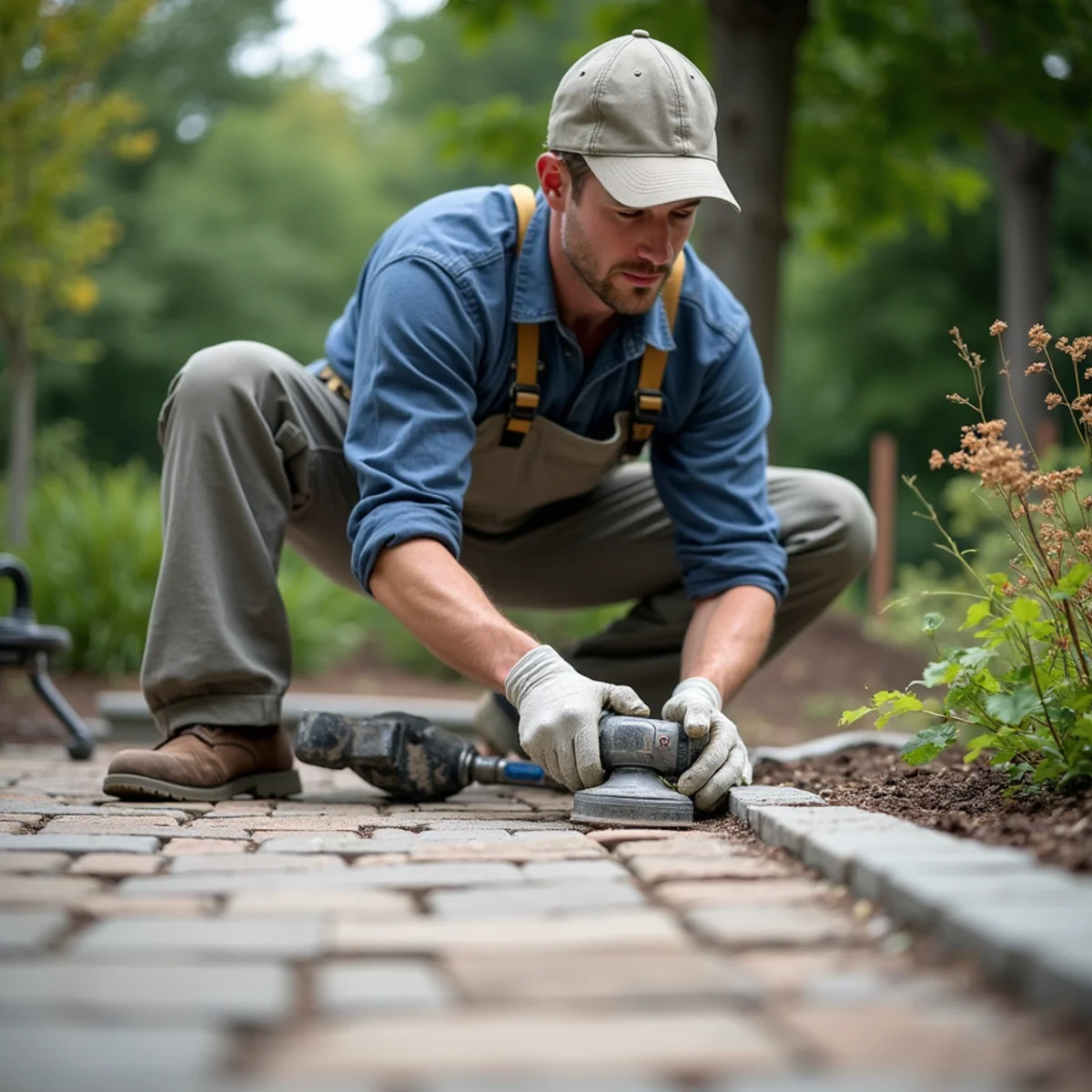
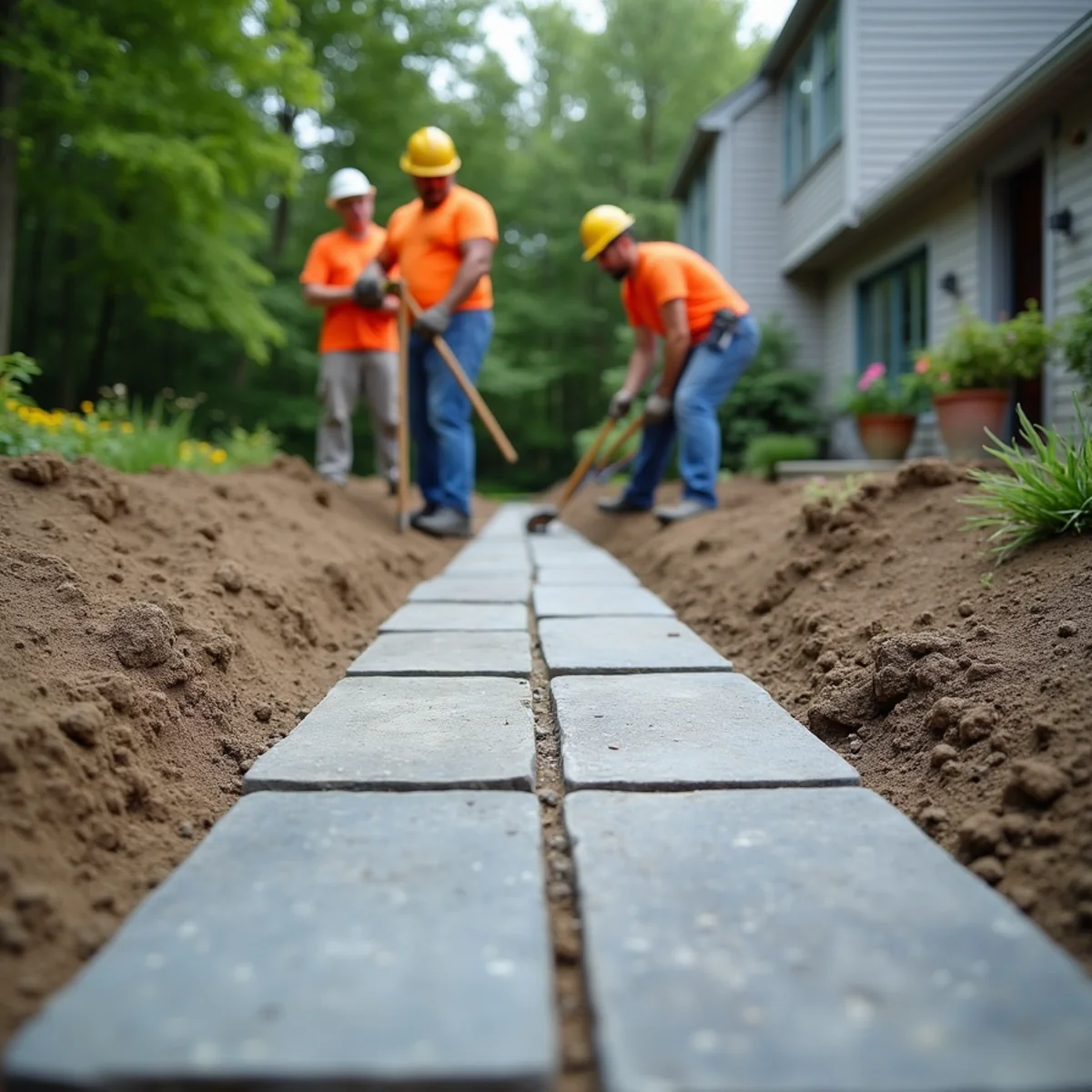
Bluestone is a natural sedimentary stone, typically sold as irregular flagstone or cut into rectangular slabs, with a range of natural color variation from blue-gray to a warmer tan. Concrete pavers are manufactured units, cast and often tumbled or textured to mimic natural stone, available in a much wider range of consistent colors, shapes, and interlocking patterns. Both are set on a compacted gravel base with a bedding layer — the installation principles are the same even though the surface materials are different.
Upfront Cost
Concrete pavers are generally the more budget-friendly option, particularly for larger patios, since the material itself is less expensive than natural stone and manufacturing consistency makes cutting and fitting faster. Bluestone typically costs more per square foot, both in material and in the labor to lay irregular pieces (if using flagstone) or handle the weight and cutting of thick slabs. For a comparable-sized patio, expect bluestone to run toward the higher end of typical patio pricing and concrete pavers toward the lower-middle.
Freeze-Thaw Durability
Both materials perform well through Massachusetts winters when the base beneath them is built correctly — deep enough excavation, properly compacted crushed stone, and good drainage so water isn't sitting under the surface to freeze and heave it. Where they differ slightly: concrete pavers are manufactured to a consistent density and are less likely to have natural flaws that could crack under freeze-thaw stress, while bluestone, being a natural material, occasionally has seams or fissures that can be more prone to splitting if not selected carefully during sourcing. In practice, base quality matters far more to long-term durability than which of the two materials you choose.
Look and Feel
- Bluestone gives a more organic, traditional New England look, especially in irregular flagstone patterns, and its natural color variation ages gracefully.
- Concrete pavers offer more design flexibility — tighter, more geometric patterns, a wider color palette, and options like permeable pavers for stormwater-sensitive sites.
- Bluestone slabs cut into rectangles read more formal and modern; irregular flagstone reads more rustic.
- Textured, tumbled concrete pavers can closely mimic natural stone at a lower cost, though a trained eye can usually tell the difference up close.
A maintenance difference worth knowing
Bluestone can be more prone to surface staining from leaves, tannins, and organic debris than sealed concrete pavers, and it benefits from periodic sealing to protect its natural finish. Concrete pavers with polymeric sand joints require less routine maintenance, though both benefit from an occasional clean and re-sand over the years.
Permeability and Drainage Considerations
For properties in towns with stormwater management requirements — Cambridge among them, where permeable paving is increasingly favored or required for certain projects — permeable concrete pavers offer a specific advantage bluestone slabs generally can't match: a joint system designed to let water infiltrate through the surface rather than run off. If your project is in a town with these requirements, that's worth raising early in the design conversation, since it can influence which material makes the most sense before you fall in love with a look that doesn't fit the site's drainage needs.
Repair and Replacement
Both materials are repairable using the same principles — lift the affected area, fix the base, relay. Bluestone slabs can be trickier to source an exact color match years after original installation, since natural stone quarries and lots vary, while concrete paver manufacturers typically maintain consistent product lines for longer, making future repairs easier to blend in.
Neither material fails first in our climate — the base does. Choose the surface you'll love looking at, and put the real engineering effort into what's underneath it.
A Detail We Check Before Ordering Bluestone
Not all bluestone is created equal, and sourcing matters more than most homeowners realize. Thermal bluestone (heat-treated for a smoother, more uniform surface) behaves differently underfoot and holds up to freeze-thaw slightly differently than natural cleft bluestone, which keeps its rougher quarried texture. We also physically inspect slabs for hairline seams before they go into a patio, since a slab with a hidden fault line is far more likely to split during its first hard winter than one that's visually sound all the way through. This kind of material selection is part of the masonry stonework judgment that separates a patio built to last from one that simply looks good on delivery day — it's not something you can fully verify from a supplier's online photo.
Mixing the Two Materials on One Property
It's increasingly common for a single property to use both — bluestone for a formal front walkway or entry landing where the natural look matters most, and concrete pavers for a larger back patio where budget and pattern flexibility carry more weight. This isn't a compromise so much as using each material where its strengths matter most; a front entry sees less traffic and more scrutiny, while a back patio needs to cover more square footage economically. If you're planning a project with multiple hardscape zones, it's worth discussing material choice zone by zone rather than assuming one material has to cover the whole property.
Making the Choice for Your Property
If budget is the primary driver and you want maximum pattern flexibility, concrete pavers are usually the better fit. If a traditional, natural New England look is the priority and budget allows, bluestone delivers that character in a way manufactured pavers can only approximate. Many properties genuinely suit either — the deciding factor often comes down to seeing and touching samples of both against your home's existing exterior materials.
Bring us your patio idea and we'll show you bluestone and paver samples side by side against your home before you decide.